

Bryn Davies, government and democracy lead, Castlemaine Institute and Really Local
Are you sick of the election before it even starts? You are not alone (but there is another way…).
September 15 was the International Day of Democracy. Don’t worry, most people didn’t know that either. There weren’t many street parties celebrating the day. And with the possible exception of a few engaged school civics and citizenship teachers, I doubt many acknowledged the day in any formal way at all.
This isn’t necessarily a bad thing. In communities where democracy is genuinely under threat, a day like yesterday would not go unnoticed.
In Nepal last year, Gen Z protesters angry about elite corruption and a social media ban toppled the government and voted on Discord to pick an interim PM. In April this year, Hungary voted out the anti-democratic Victor Orban after years of controlling dissent and media in that country. In Madagascar, protests toppled the government, but the military took over and has continued to crack down on democratic movements ever since.
Even in one of the world’s oldest democracies, USA, Freedom House says democracy is eroding, due to executive overreach, pressure on courts, the press, universities and the civil service, and partisan attacks on how elections are run.
Australia generally has an impressive track record when it comes to strengthening democracy, including the first country to pioneer the secret ballot (it is still even called the ‘Australia ballot’ by some countries), one of the first places to give women the vote (in South Australia in 1895) and one of only few countries with compulsory voting and preferential voting as standard.
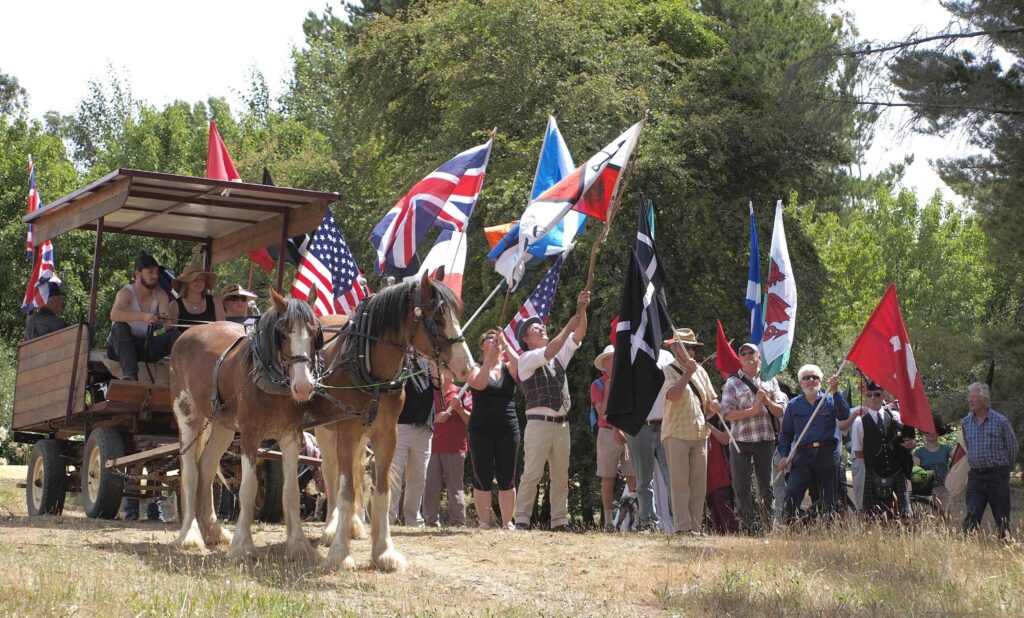
In the local Mount Alexander community, the Monster Meeting (followed by the Red Ribbon rebellion in Bendigo, and the Eureka Stockade in Ballarat) was among the most influential mass uprisings that led to increased participation in government (white men first, then women, then First Nations communities much later).
So we have a lot to be grateful for.
And yet, the general sense is that everyone is a bit over it all.
Research by think tank McKinnon (State of Australia’s Democracy report, released in March this year) found that 87 per cent of Australians think the political system needs reform. And more than half (51 per cent) feel politicians do not understand or represent them.
Australians still value democracy at world-leading levels (76.0 per cent of Australians prefer democracy to any alternative) but only 31.2 per cent trust political parties; 35.9 per cent trust federal politicians and 37 per cent agree elected parliaments are effective at tackling major challenges.
Herein lies the distinction. People are not sick of democracy, they are sick of the way it is run and the people running it.
The research actually suggests that people want more democracy, not less.
Last week the Centre for Policy Development released a Purpose of Government report that found that nearly two in three Australians (65 per cent) say ordinary citizens should have a greater say in setting government’s policy priorities.
So how can we do that?
Well one model is to bring ordinary people together to consider and make recommendations on tricky issues, rather than only leaving that to elected members. The model is called a ‘citizens assembly’ and it works like a jury – people chosen at random – but for community decisions.
Citizens assemblies have been run for nuclear waste in SA (the citizens rejected the government’s proposal); on housing affordability in Melbourne and on abortion in Ireland.
And local Castlemaine-based community group Really Local has attracted funding to build one in the Mount Alexander Shire. The plan is to make decisions as a community about what we care about, and take these to government to make it happen.
To find out more sign up for updates at www.reallylocal.au, save the date for a launch on November 12, and keep an eye out for more articles in Midland Express or Castlemaine Mail over the coming months.
Bryn Davies is a Castlemaine resident and former public servant. He is democracy and government lead at Castlemaine Institute, the co-founder of Democracy for Dinner and Really Local.