

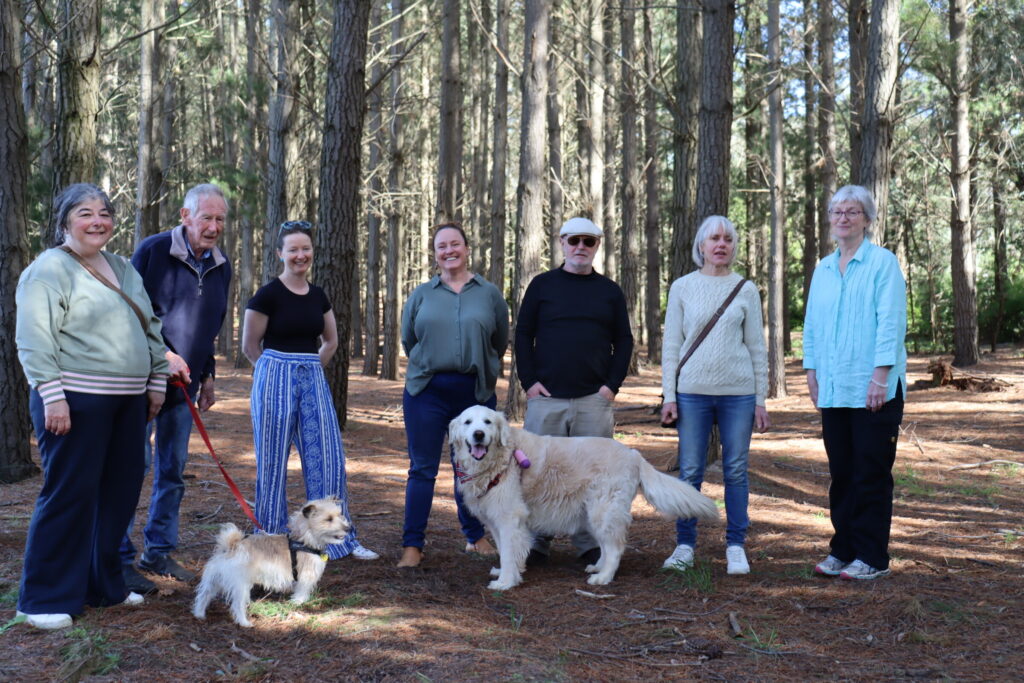
The fight to keep Gisborne Pine Plantation as public open space in perpetuity has reignited as the site’s future is up in the air.
Local families and community groups donated the 4.5 acres at 121 Aitken Street to Gisborne Primary School in the 1920s. It was intended for use as ‘Endowment Plantation Scheme and Bird Sanctuary’ but residents fear it could now be developed.
The Victorian Government currently owns the site through the Department of Education but in 2017 it was declared surplus to the department’s requirements and was to be prepared for future sale.
However, local residents want the land to remain a community asset.
Gisborne resident, and former shire councillor, Helen Radnedge has been instrumental in the fight to keep the land for public open space.
“It was donated by local families and community groups. It was not intended as a state government fundraiser,” Ms Radnedge said.
The site is located between the Gisborne Cemetery and Gisborne Secondary College and is currently used for a range of recreational activities.
The site is of ecological significance as a meeting place between bioregions and ecological vegetation classes. Indigenous artefacts have also been found there, and burials are listed under Heritage Victoria. Mapping from 1856 shows a waterway on site.
Ms Radnedge said the original intent for the site could be honoured while also incorporating its current uses and revegetating the site over time with local native species. She said it could also include a seed bank for schools to harvest and sell from.
“Pine plantations were created in the early 1900s to teach forestry to primary school students, the equivalent of that in this century would be to teach students revegetation, ecology and care of country,” she said.
“This project has the support of a number of local community groups and individuals who are competent and willing to author an environmental management plan for the long-term management of the site as an in-kind contribution.”
Neighbouring resident Vicki Gauci said keeping this slice of nature was important as more housing moved into Gisborne.
“We’ve got all these housing estates going up around us and we’re losing what’s unique about Gisborne. This is something we need to protect,” she said.
NO COUNCIL FUNDS
Macedon Ranges Shire Council said the council was informed of the site’s status in 2017, however, was not in a position to make an offer.
“Following consideration of the site’s constraints and the absence of available budget, the council advised the department that it was not in a position to purchase the land,” said Lisa Knight, council’s director of corporate.
The council was advised its acquisition of the site would need to align with the state’s Sale of Land Policy and be subject to valuation by the Valuer-General Victoria.
As a councillor, Ms Radnedge led a push to engage the state government about the site back in 2020, which gained support.
The CEO wrote to the state government advocating for the return of the land to the community for a revegetated public open space and significant cultural heritage reflection site.
Council has also received submissions from residents asking the council to work towards acquiring the land for this purpose, however, no further action has been taken.
“At present, the council has no funding allocated for the site, and no adopted strategic planning policy has identified a requirement for the council to acquire or develop the land,” Ms Knight said.
“Council remains supportive of outcomes that deliver community benefit and recognise the site’s environmental, recreational and
cultural heritage values.”
Now Gisborne residents are looking to the state government to consider possibilities for the site that would keep Gisborne Pine Plantation a community space and honour the original intent of the site’s donors.