

An archaeological investigation into disturbed human remains at Castlemaine Cemetery has recently completed drone mapping of the cemetery. The mapping revealed that the number of piles containing disturbed graves is significantly higher than anticipated.
The Castlemaine Cemetery Burial Recovery Project is a community-led investigation into the decades-long systematic displacement of human remains from their original burial sites. The bulldozing and removal of remains to re-sell burial plots began in the 1960s and continued for decades.
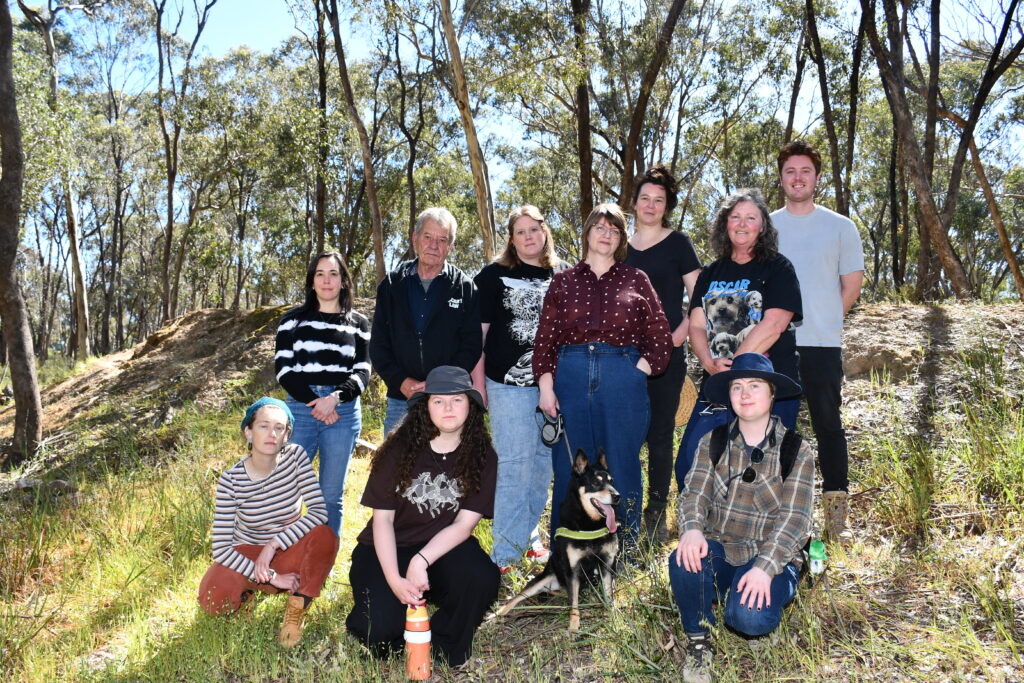
Archaeologists who have been closely following the project visited the cemetery last month to see the disturbed piles of dirt and remains for themselves. Travelling from as far as Queensland, the seven archaeologists, each with different specialities, are determined to help right the wrongs done to the deceased and give them the dignity and respect they deserve.
Private heritage consultant and project overseer Nicci Foster said that when she started, she thought there were 12 spoil piles, but the recent LiDAR mapping undertaken by Jerry Leech showed significant anomalies at multiple locations with grave contents.
“We don’t know the actual number of people impacted due to grave depths, but there are around 5000 people buried in the disturbed sections, so it would be at least a few thousand,” she said.
The multi-year investigation has also revealed that approximately 100 cubic metres of soil was loaded into trucks and taken to an off-site location after the discovery of a skull led to a police investigation in 1994.
“It got scooped up, loaded onto four trucks, driven to an off-site location and dumped. We think we know roughly where that is and have walked it. It gets more depressing the longer you walk because it’s just a tip, so finding out what was put there and when is just not possible. It’s horrendous.
“We won’t necessarily ever be able to identify the bones, and we won’t ever be sure about the off-site location.”
The LiDAR also showed a drainage system cut that impacted the Chinese section of the cemetery, likely impacting 18 graves. The cemetery is non-denominational, and the burials include people from many faiths, including Jewish, Baptist, Catholic and religions that don’t even exist anymore, like Primitive Methodists.
“There is an enormous variety of cultures impacted. It was the Goldfields, so there were a lot of babies and children, women who were victims of domestic violence and Chinese people,” Nicci said.
“There are a lot of different opinions on how to manage this, but it is not an archeology project; it is a community project that requires archeology.
“There will be an excavation and a reburial into a section of the cemetery that is virgin ground, but that will ultimately be a decision for the entire community. It’s the people in these piles that will dictate what happens and the representatives of those people, both culturally and in the community.”
A tandem project, ‘The Right to Be Remembered’, is also gaining momentum with more than 150 people joining the research team. Consisting of family history researchers, genealogists, descendants, and interested community members, the team are working to learn more about the lives of the people whose graves were desecrated, helping restore dignity to the deceased.