
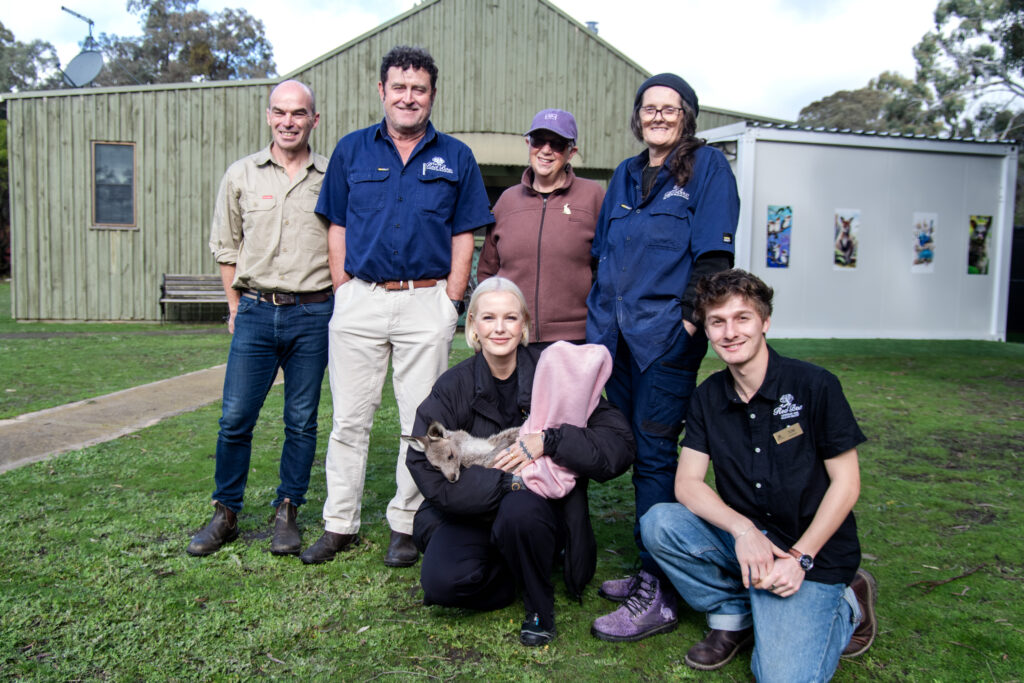
For the past 10 years, Nikki Medwell has spent her days (and often nights) caring for sick and injured wildlife at the Red Box Wildlife Shelter – her rehabilitation sanctuary in Elphinstone.
While the 60-acre bush block, located near Leanganook (Mount Alexander), was spared by the January bushfires, the impacts on the shelter were profound.
Terrified kangaroos that had fled the fire were brought to the shelter for refuge. Despite Nikki’s best efforts to calm them, with smoke hanging heavy over the property, the large native animals destroyed many of the enclosures and fences.
“The kangaroos fled down the south side of the mountain – the stories I heard from rescuers were so distressing – I still struggle to talk about it,” Nikki said.
“The Humane Society International were here, and we spent nearly a week, eating, sleeping and showering at the clinic.”
One of the survivors, a joey called Logan whose mother died of respiratory failure from the smoke, is still residing at Red Box.
“We were able to save Logan, and he is doing really well,” she said.
“He is still quite small, so he needs to grow a bit more before he can be released, but he has made lots of friends here.”
Last weekend, Animal Justice Party MP Georgie Purcell visited the shelter to announce their success in receiving $65,000 in state funding to purchase vital equipment for the on-site clinic.
“Red Box Wildlife Shelter, led by the amazing Nikki, does incredible work – day in, day out – for our wildlife and operated as a frontline service for animals in need during the recent Harcourt bushfires,” Ms Purcell said.
“On top of providing a home for injured and displaced animals, Red Box is home to the RB Veterinary and Wildlife Centre, which has provided free vet treatment since 2020.
“Nikki’s work also allows other wildlife rescuers to operate by offering a free drop-in service to collect much-needed supplies.”
The money will enable the clinic to purchase vital equipment, including an orthopaedic kit and a microscope, and also provide power to the three ICU and three recovery huts.
“The clinic, which started as a basic treatment room, is going from strength to strength,” Nikki said.
“It’s now a fully established, functioning clinic. We operate solely on donations, so it can be hard to try to save money for equipment. These types of grants make it possible to expand the clinic and care for the welfare of the animals.”
Staffed by veterinary surgeon Dr Mark Sayer and, more recently, veterinary student Tom Law, the clinic operates one day a month.
“I would love to be able to open the clinic more often, so if there are any veterinarians or students keen to gain experience, who would like to volunteer, that would be fantastic!” Nikki said.