

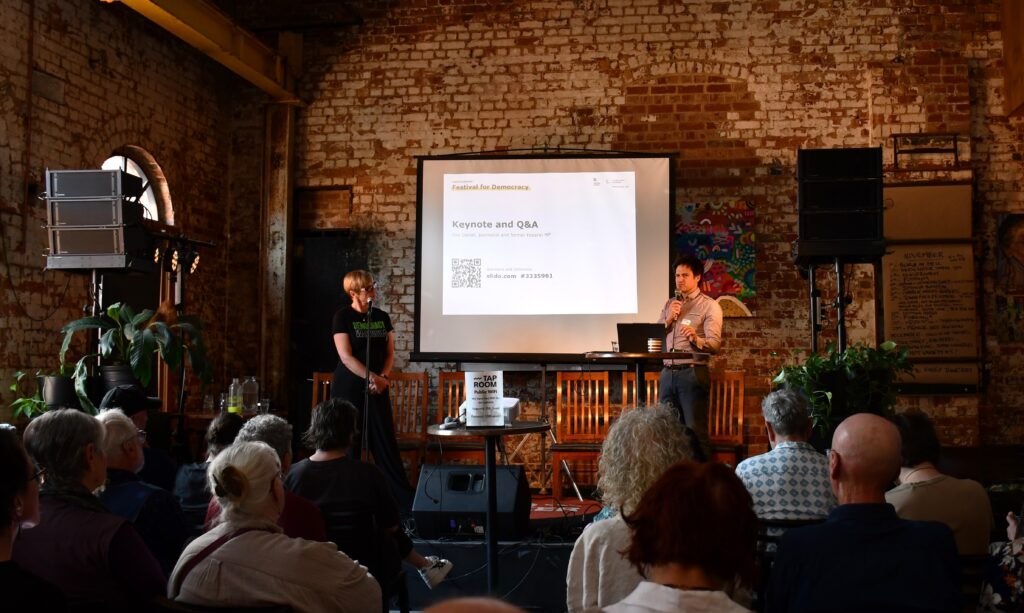
Bryn Davies
In 2010, about one in six Victorians voted early. By 2022 it was almost half, and in Bendigo West it was closer to 55 per cent. This year the Victorian Electoral Commission expects about 60 per cent of us to vote before election day.
Voting early is convenient, but it also means deciding early. So it’s worth spending time working out what you actually think before you go. Thankfully there are lots of tools to help.
Build a Ballot
One I recommend is Build a Ballot (buildaballot.org.au). It’s free and independent, and it doesn’t take money from parties, candidates or campaign groups.
All you do is jump online, you work through key issues and election promises, from housing and energy to health and the cost of living, marking how strongly you support or oppose each one. You then enter your postcode and it shows you the candidates standing where you live, for both the lower and upper house. If you want to know more before you decide, click the + on any issue for a deeper dive into what’s being proposed.
Build a Ballot gives each candidate a match score, showing how closely their positions line up with yours. You then literally build your own ballot.
You drag and drop the candidates into the order you want (using the match scores, or whatever you think it should be) and get your own personalised how-to-vote card. This will be emailed to you, and you can save it, print it and bring it with you to voting.
You can list your card in order of your preference, or in the order the candidates appear on the ballot paper, whichever makes it easier to copy across in the polling booth.
I did mine this week, and all up it took less than 15 minutes.
Other tools
Vic Vote Match (vicvotematch.pages.dev) is a quick 15-question quiz that compares your views with 10 parties, and has a separate page for independents. The Australian Election Tracker (electiontracker.au) lays out the main parties’ positions side by side across 15 issues, each linked to its source. Many interest groups also publish scorecards on their own issue, such as AMA Victoria on health or Sustain on food.
Changes to voting
On the small lower house ballot, you still number every box. The big, upper house ballot has changed this year. At past elections, you could write a single 1 above the line, and the party you chose then decided where the rest of your preferences went. Those ‘group voting tickets’ have now been abolished. Instead, you number at least five boxes, either above the line for parties and groups, or below the line for individual candidates, but not both. You can keep numbering past five if you like. Either way, your preferences now go only where you put them.
The Victorian Electoral Commission explains the changes at vec.vic.gov.au/about-us/legislation/electoral-act-amendments-2026
Don’t forget we are neighbours
While our current system might like to divide us into teams, let’s not let our choice of colour affect our character. Our shared values of respect and tolerance are stronger than our voting preferences or policies we might dislike. And let’s keep that in mind as we meet people at a polling station too, no matter how much you might disagree with them. (My personal approach: go to each of the volunteers, take their how to vote cards, and thank them for taking the time to get involved, and then hand the cards back at the end).
Early voting centres are open every day 9am to 6pm until this Friday November 27 and election day is this Saturday November 28, 8am to 6pm.
Bryn Davies is government and democracy lead at the Castlemaine Institute and founder of reallylocal.au
Sign up to keep in touch with local grassroots democracy activity.