
A leading Australian community composting advocate says Mount Alexander Shire has a rare opportunity to build on an already thriving grassroots movement rather than replacing it with a one-size-fits-all waste solution.
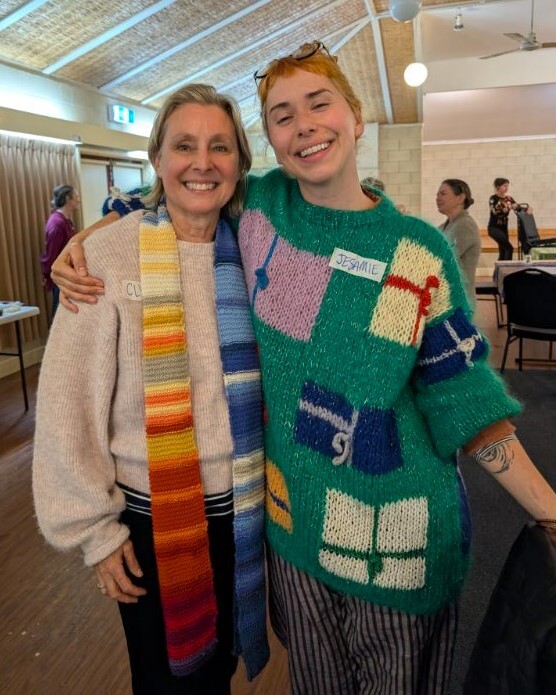
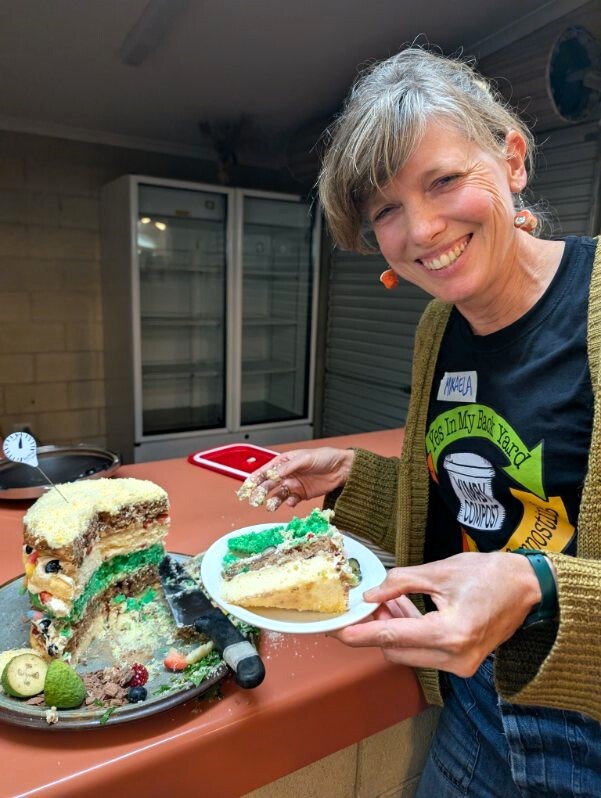
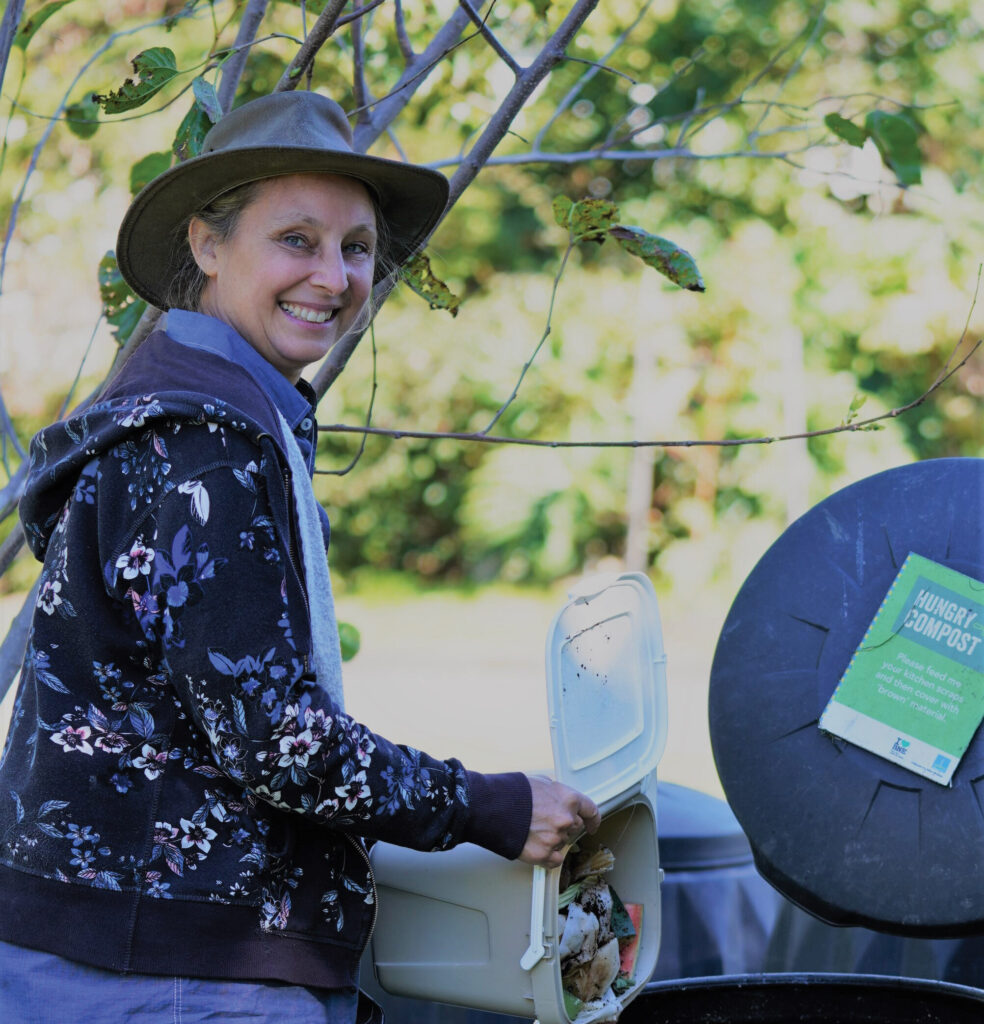
Churchill Fellow and community composting researcher, Clytie Binder, visited Castlemaine last week to learn more about YIMBY (Yes In My Back Yard), the volunteer-run neighbourhood composting network that has grown to more than 650 participating households across the shire.
Clytie, who pioneered Brisbane’s community composting hub network while working in local government, said the success of YIMBY stood out not only for the amount of organic waste being diverted from landfill, but for the broader social benefits it generated.
“What is happening here is unique, special and really successful,” she said.
Inspired by large-scale community composting programs in New York City, Clytie established a trial of four composting hubs in Brisbane in 2016. The concept quickly expanded to about 30 hubs and attracted more than 13,000 registered households. Despite the program’s popularity, she said council decision-makers often struggled to recognise its value because they measured success primarily in tonnes of waste diverted from landfill.
“When they compared it directly to Food Organics Garden Organics (FOGO), community composting looked expensive per tonne.
“But they weren’t taking into account neighbours meeting each other, people exercising outdoors, reduced social isolation, multi-generational skill-sharing and all the other co-benefits that come with these programs,” she said.
“There are health benefits, wellbeing benefits, community resilience benefits and environmental benefits that don’t fit neatly into those calculations.”
Following her Churchill Fellowship research in New York, North America, Mexico City, Cuba and Canada, Clytie identified a lack of tools for community composters to adequately measure and report on the impact and benefits they make as a sector.
She went on to connect groups nationally through the Local Community Compost Alliance of Australia.
Through her research, Clytie also found that current policy and funding arrangements were not set up to embrace community composting as a viable and valuable way to process ‘waste’.
“The ‘siloed’ way government operates does not allow for the holistic appraisal required to assess these types of initiatives,” she said.
“It often becomes framed as an either/or situation, when really it doesn’t have to be.”
Clytie believes Mount Alexander Shire is well placed to explore a trial utilising and expanding on the composting models that are already in place.
“When you already have a community doing this so well, it makes sense to build on that rather than overlook it,” she said.
She also argued that community composting contributes directly to goals around health, wellbeing and resilience.
“Something as simple as keeping food scraps locally helps neighbours get to know each other, creates stronger community connections and builds capacity to respond during emergencies,” she said.