The Victorian Government has been warned that the current model of volunteer wildlife rescue is unsustainable and wildlife roadstrike danger in increasing.
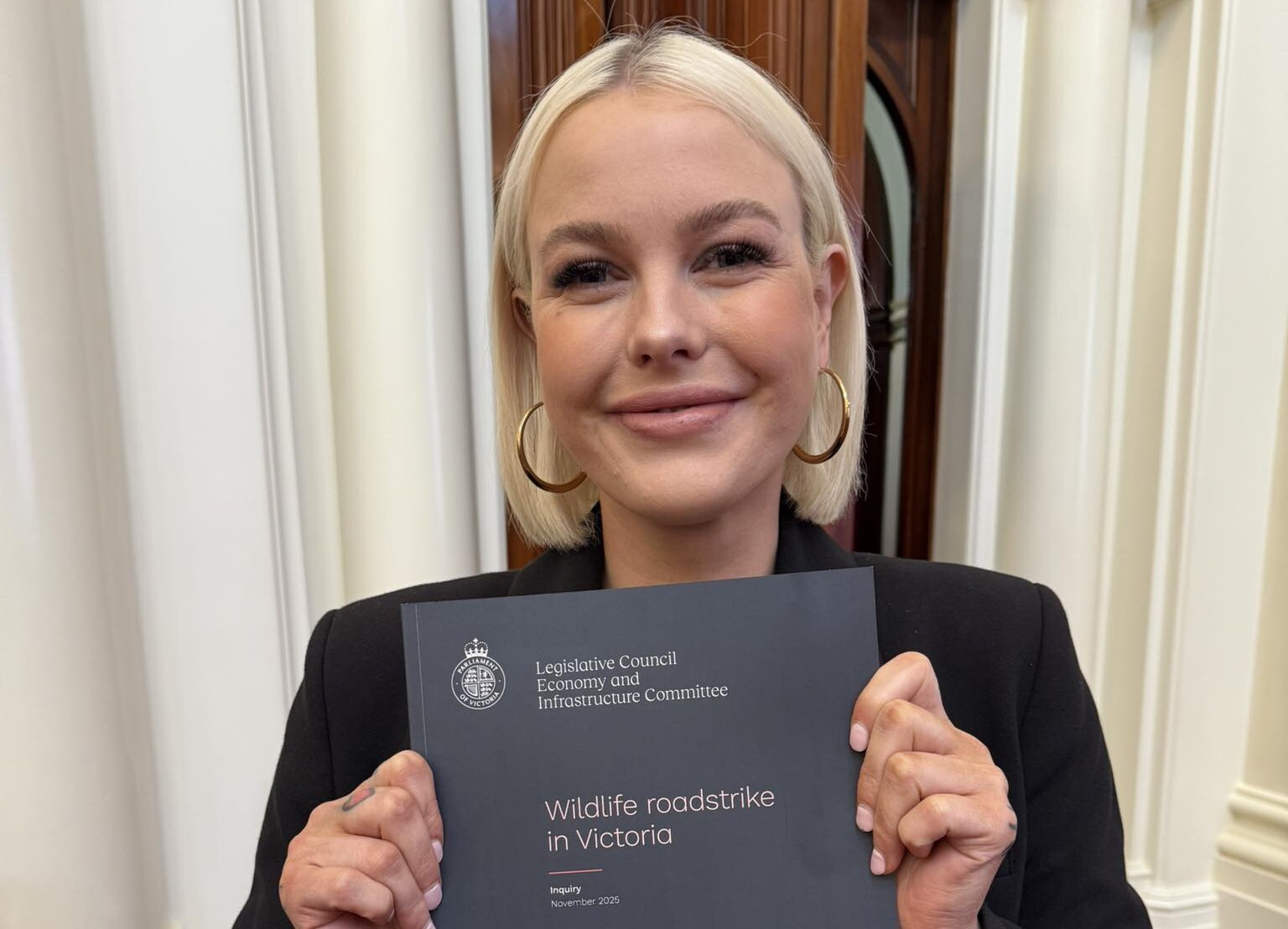
The Legislative Council Economy and Infrastructure Committee tabled its final report on the Parliamentary Inquiry into wildlife roadstrike in Victoria last Tuesday. It presented 32 findings and 18 recommendations to respond the crisis that hits hard in Macedon Ranges, Mount Alexander and Hepburn.
Committee chair Georgie Purcell, Animal Justice Party MP for Northern Victoria, said it was clear the local community wanted action.
“One thing this report makes clear is that this crisis is being responded to almost entirely by volunteers – and the sector has reached breaking point,” she said.
The report found volunteers incurred substantial costs when delivering rescues/care and the current volunteer–based model was no longer sustainable.
“This is a workforce that is burnt out and struggling with retention in a cost-of-living crisis where they are expected to fundraise to ensure that our roads are not only safe for animals but motorists too. The very least the government can do is support this work,” Ms Purcell said.
“Our area of the state has the highest rate of wildlife roadstrike of anywhere in Victoria and this inquiry highlighted the community desperately wants action.”
HELP FOR RESPONDERS
The report recommends professionalising and properly funding the volunteer wildlife rescue sector, ongoing reimbursements to wildlife carers, and stronger safety protocols to protect responders.
Victorians could also contribute a small optional financial contribution to volunteer wildlife carers with their vehicle registration each year. The report found data collection on wildlife roadstrike was fragmented and inconsistent, with local organisations, councils and insurance companies keeping separate records.
A centralised, publicly accessible wildlife roadstrike data collection database was recommended, as well as a single state-wide number for reporting wildlife-vehicle collisions.
The report suggests the Victorian Government consider developing a code of practice for accredited agencies responding to wildlife roadstrike.
Hundreds of submissions shaped the report with three days of hearings including strong representations from the frontlines in Macedon Ranges, Mount Alexander and Hepburn.
CHANGES FOR DRIVERS?
The report calls on the Victorian Government to consider requiring motorists to stop and render assistance to wildlife they have struck when safe to do so.
Other recommendations include a state-wide education campaign on wildlife roadstrike and examining feasibility of variable speed limits, supported by cameras and enforcement in high-risk areas.
The report seeks the Victorian Government to undertake research to trial innovative animal detection systems with artificial intelligence.
Internationally, wildlife crossing structures and exclusion fencing in Canada and The Netherlands have been shown to significantly reduce animal–vehicle collisions.
However, the report found upfront costs of wildlife crossing structures and exclusion fencing were “considerable”. It suggested a cost-benefit analysis with data would be beneficial before proceeding in Victoria.
It recommended the Victorian Government consider a program of major wildlife crossings, beginning with pilot sites in high–risk corridors, with the long–term objective of network–wide rollout.
Development of a Wildlife Roadstrike Strategy was recommended, that focused on proactive population management, a centralised state–wide database, and targeted investment in crossings and fencing at verified hotspots.
GROWTH IMPACTS
The report found that Victoria’s rapid population growth, particularly in peri–urban regions such as Macedon Ranges Shire and Hume, is intensifying rates of wildlife roadstrike due to habitat destruction and landlocking of native wildlife.
A recommendation was that the Victorian Government embed mandatory wildlife-sensitive planning measures into all new housing, infrastructure projects and planning schemes.
Key local organisations Mount Alexander Wildlife Watch and Macedon Ranges Wildlife Network welcomed the final report last week.
The government now has six months to respond to the report.