Wildlife advocates have raised concern for the welfare of native animals and how the state government will respond since bushfires ravaged habitats in the past two weeks across Victoria.
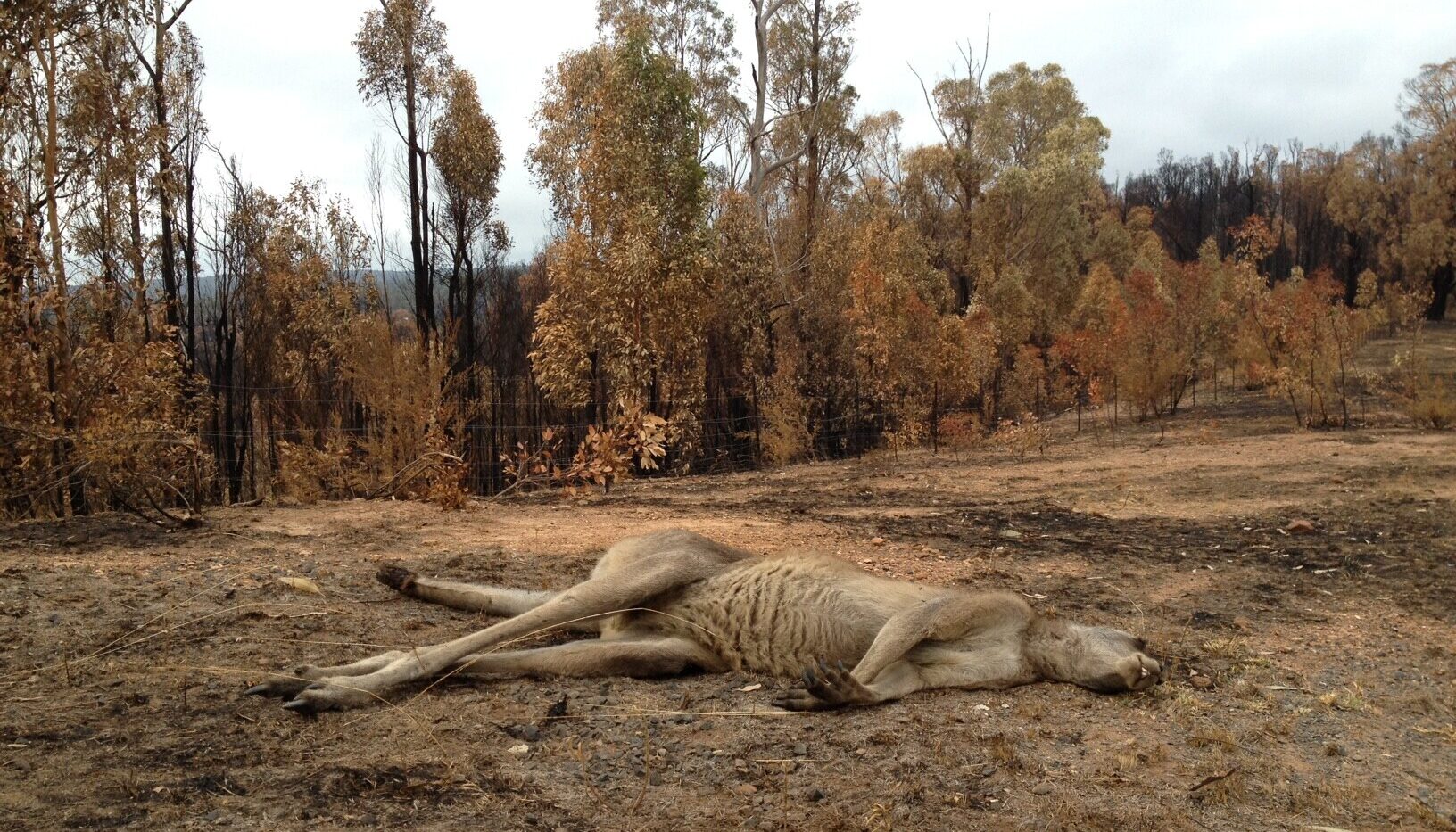
Rescuers across this region have so far aided – among others – burnt kangaroos and koalas, or their orphaned offspring, that emerged from the charred surrounds of Harcourt.
But it’s been curbed by police blockades; only residents and emergency personnel are allowed to pass through.
Ian Slattery, a wildlife rescuer within the Mount Alexander region, said government authorities were prohibiting them from assisting injured wildlife, even in areas where blockades weren’t set up.
“The government put numerous rescuers, including me, through advanced bushfire rescue training several years ago but refused to call us up or let us in, choosing to rely on departmental staff who are renowned for euthanising everything,” Mr Slattery said.
“Private property owners are calling us, highly distressed with burnt wildlife on their property. These people are in tears, I’m telling you”.
“We’re going out to rescues and DEECA [Department of Energy, Environment and Climate Action] are arriving and telling us to leave, even threatening arrest.”
When Sally Clift, a Harcourt resident with 25 acres, was allowed to return home after the fires, she spotted a burnt joey repeatedly falling over. She contacted Wildlife Victoria but after they failed to arrive within 24 hours, she contacted Mr Slattery, who was on her property 30 minutes later.
“He had the most awful burnt feet with maggots all over them. And that was something I’ll never unsee,” Ms Clift said.
“And then while I’m helping them, I got the call [from Wildlife Vic] saying, ‘hi, we’ve got a report’. And I said, ‘oh, that was more than a day ago. But there’s already people here helping’ – thinking they were all part of the team. So immediately DEECA come, they turned up within, I’d say, six or seven minutes. It was a bit of a Mexican Standoff.
“They started to take down their number plates, asking Ian and his team what their names were. And I was just standing there going, ‘I can’t believe this is happening’.”
Mr Slattery said he understood being barred from entering active fire zones, but this property was, “open to public access — there was no police blockade, tradesmen were working and kids were riding up and down the street on bicycles”.
He also feared DEECA’s wildlife team would euthanise many worth rescuing, and said he’d been in contact with all the local shelters, who so far, were receiving only few burnt animals.
With this ongoing dispute between volunteer rescuers and government officials, Animal Justice Party MP Georgie Purcell weighed in on the issue. She told the Express it had never been a more important time for the state government to rally behind the wildlife rescue community.
“Something that happens almost every single fire season – really disappointingly – is that the most qualified rescuers and carers who have the knowledge of native animals and the care that they need, but also of the local areas that they live in, are often blocked from the fireground,” Ms Purcell said.
“A number of years ago we attempted to work with the government on this and they established the WESN [Wildlife Emergency Support Network], which is meant to be deployed in emergency situations. And year-on-year we see this service fail.
“No matter how much warning or advance notice we give the government to be more prepared when it comes to these situations, we have been left feeling disappointed with their response.
“They just need to trust volunteers who know best to get out on the firegrounds. They’re trained, they’re responsible, and they know how to deal with these situations. Many of them are actually volunteers with the local CFA’s or other fire services as well.
“So we will continue those conversations with the government and go back to the minister with feedback about how this was handled.
“But our immediate focus right now is ensuring that those volunteers can get on the ground. Because every single day that they’re not on the ground more animals are being left to suffer.”
Commercial killing of kangaroos
Ms Purcell also called on the state government to pause its Kangaroo Harvesting Program that pays shooters to reduce kangaroo populations.
Mr Slattery agreed with the sentiment and said, “It’s unconscionable and cruel that kangaroo harvesters are still out there killing what remains of our precious wildlife, while elsewhere, thousands of them are dying slow, painful deaths on firegrounds right now.”
“If the government had any decency it would call a halt to the cruel permission it gives to commercial harvesters who will be out there right now killing the few terrified kangaroos that have fled or survive in safer habitats”.
During the 2019-20 Black Summer bushfires, the state government temporarily halted its Kangaroo Harvesting Program while the impacted kangaroo population was assessed. A study funded by World Wildlife Fund Australia, estimated about three billion animals were killed or displaced during this period.
Wildlife advocates fear similarly harsh statistics, in the millions, could result from the latest spate of bushfires across Victoria.
The Express asked DEECA whether pausing the KHP had been considered, and a DEECA spokesperson said, “It is too early to understand the full impact of these bushfires on wildlife including kangaroos, and any associated impact on the KHP”.
Mr Slattery’s responded, “You have to be in fairyland to think that”.
“The fact that the Premier has announced a State of Disaster makes it obvious there has been a devastating impact on kangaroos.”