

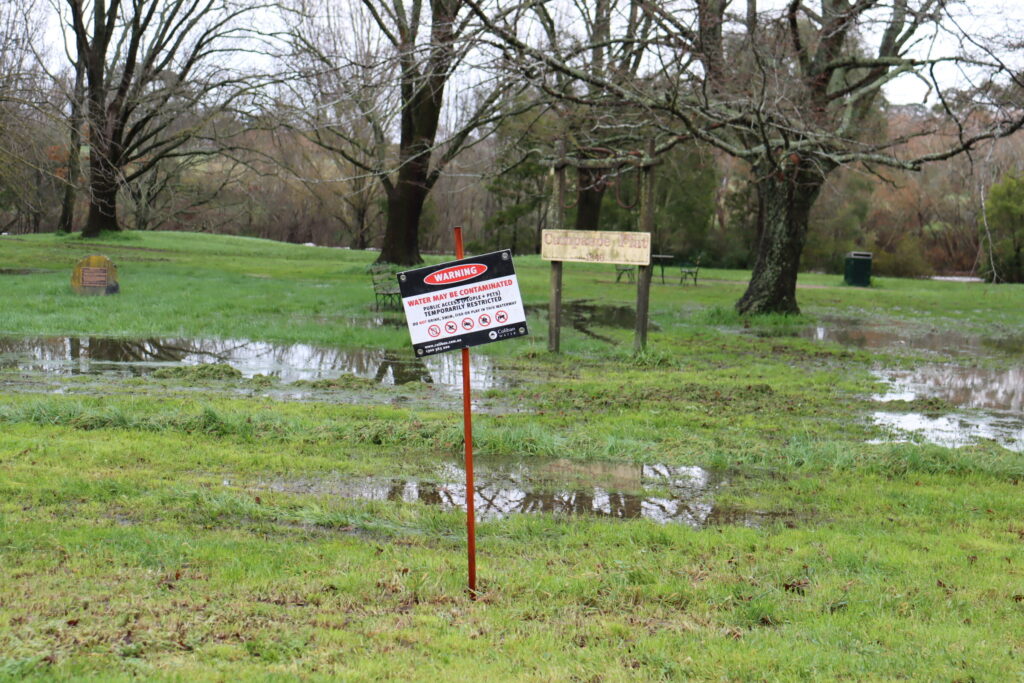
Heavy rain has again triggered sewer overflows in Kyneton and Malmsbury, prompting renewed concern from residents about the impact on local waterways.
The incidents last Wednesday followed similar spills from pump stations in the two towns just two weeks earlier.
Edgecombe resident Graham Connell said sewerage from the Kyneton spills was flowing into the Campaspe River and Post Office Creek.
“Enough is enough, it’s happening far too regularly and nothing seems to be done about it,” he said.
Coliban Water confirmed heavy rain had placed pressure on stormwater and sewerage infrastructure across the region, including at Trentham, Tylden and Castlemaine.
“During heavy rain events, sewerage infrastructure can be inundated and fail to keep up with the volume of stormwater entering the system,” a spokesperson said.
The water authority deployed eduction trucks ahead of the predicted rain to help manage stormwater levels and minimise spills. The trucks will remain in the region as clean-up operations continue.
Coliban Water said water quality testing would be undertaken at sites where spills may have reached waterways to assess any environmental impact.
It said the risk to the community and environment was considered low because sewage was diluted by stormwater and, where spills reached waterways, by increased flows in rivers and creeks.
“Sewer spills are never ideal,” the spokesperson said.
“We understand community concerns about infrastructure capacity during wet weather and the potential environmental impacts when spills occur.”
Coliban Water said a 10-year, $100 million program of upgrades was under way across the region to replace ageing infrastructure, improve resilience during extreme weather and cater for growing communities.
Mr Connell said he had also asked Macedon Ranges Shire Council to carry out mandatory stormwater inspections of new and existing homes to ensure stormwater was being directed into the correct system rather than the sewer network.
He said stormwater should be separate from the sewerage system and argued more needed to be done to prevent stormwater entering the network during heavy rain.
“Council has a lot to answer for because the stormwater is meant to be separate to the sewerage system and should not be able to get into the sewerage system to overload and pollute,” he said.
Dom Testoni, council’s director of assets and operations, said council did not undertake mandatory inspections of stormwater connections for existing homes.
“For new developments, stormwater drainage arrangements are assessed through the planning and building approval process and must comply with relevant legislative and statutory requirements,” he said.
“Where concerns relate to stormwater being incorrectly connected to the sewerage network, residents should contact the relevant water authority. Water authorities are responsible for managing, monitoring and investigating sewerage infrastructure and connections.”
“Council is responsible for the municipal stormwater drainage network. It does not have regulatory responsibility for private connections to the sewerage system and therefore does not undertake inspections or enforcement activities relating to those connections.”