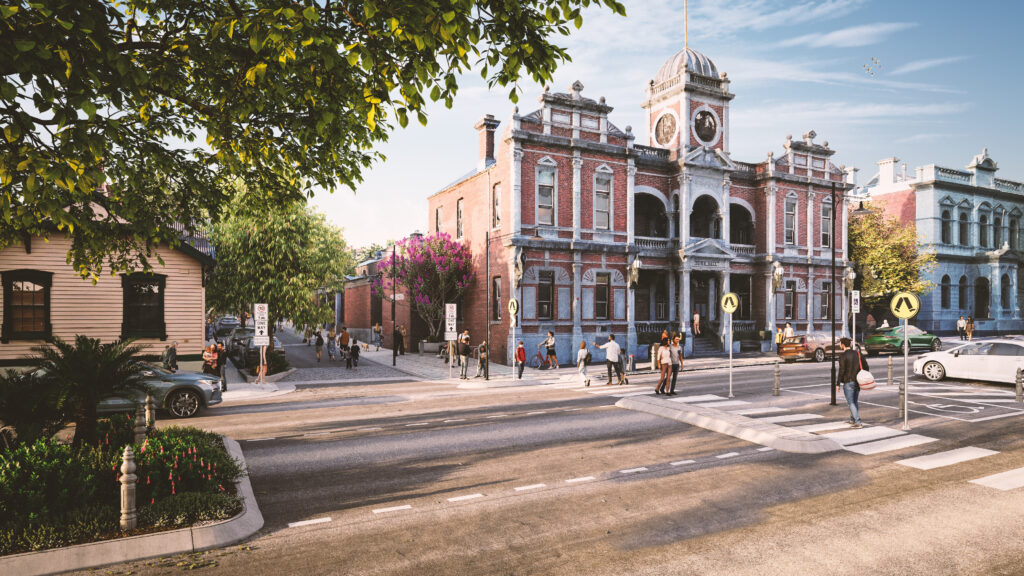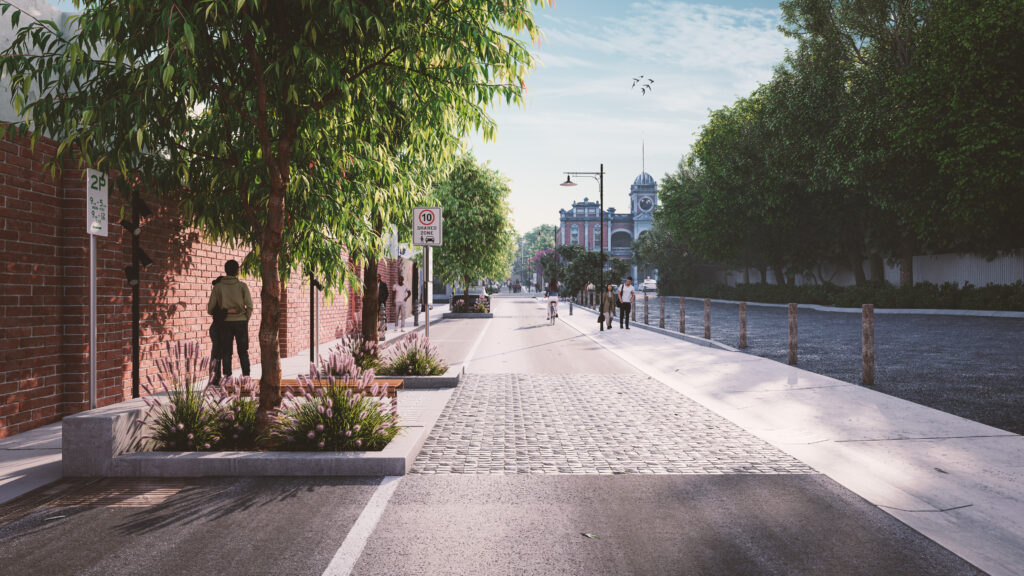

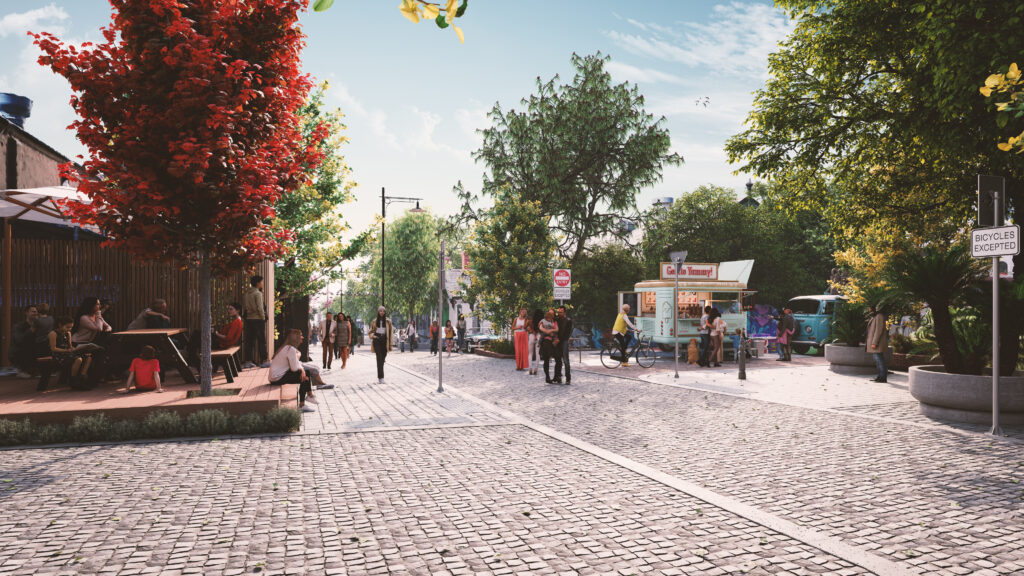
Works to transform the heart of Castlemaine’s CBD are now under way and are expected to be completed by mid-2027.
The $12.1 million redevelopment of Frederick Street has drawn mixed reactions from residents, though the mayor Cr Toby Heydon has described it as a “once-in-a-generation opportunity” to create a safer, greener and more connected town centre.
Cr Heydon acknowledged community concerns regarding public expenditure but emphasised that the majority of funding has been provided by the federal government and is tied specifically to the project.
“We can’t just take that money and spend it on housing or something else. If we don’t do this, the money goes back,” he said.
For the mayor, the most important benefit of the project is increased safety for residents.
“We’ve had a number of falls out there, mostly by elderly residents. There are clear trip hazards in the pavement, and paramedics have been called more than a few times.
“The stretch between Mostyn and Lyttleton streets is considered the most problematic, and even without the proposed overhaul, council would be forced to invest in repairs,” he said.
The planned redesign centres on a single-level, shared-zone concept, where traditional distinctions between road and footpath are removed and the street will become a 10km/h shared zone, prioritising pedestrians and cyclists, while still allowing vehicle access.
“When there’s no gutter, people drive differently. They’re more cautious, more aware of pedestrians,” he said.
Beyond safety, the project aims to reshape how the space is used — particularly during Castlemaine’s busy festival periods.
Cr Heydon said the upgraded street could become a natural hub for events such as the Fringe Festival, supporting performers and informal gatherings.
“It’s always felt a bit like a laneway rather than a thoroughfare. This puts a spotlight on it as a place to be, not just pass through,” he said.
The redesign also seeks to strengthen connections across the town centre, linking key destinations including the library, Town Hall and market precinct, while encouraging foot traffic between retail areas.
Cr Heydown said this connectivity was especially important in light of changing shopping patterns with the introduction of Woolworths on the edge of town drawing activity away from the centre.
“The more we can bring people through town and connect those spaces, the better,” he said.
Environmental considerations are another key driver. Increased tree canopy and planting are expected to provide significant shade, helping to mitigate the urban heat effect and improve comfort during hotter months.
“Shade can reduce temperatures by up to 10 degrees,” Cr Heydon said.
“It also improves air quality. That’s critical as our summers change.”
The project includes undergrounding power lines, a move that not only improves the streetscape but also reduces risks during storms. Drainage upgrades and improved lighting are also planned.
Despite the scale of the works — estimated at $12.1 million — the financial burden on council is relatively small. About 90 per cent of the funding comes from a federal program aimed at revitalising underused streets in regional towns, with council contributing $250,000.
Heritage considerations have also been factored in, with existing elements such as historic horse tethering rings to be retained, and other materials reused where possible. The inclusion of public art — including opportunities to reflect Dja Dja Wurrung culture — is another feature Cr Heydon said would add depth and meaning to the space.
While some community concerns remain, particularly around spending priorities, Cr Heydon believes the project represents a rare chance to deliver lasting improvements.
“It’s a big investment. But when you look at the safety, the accessibility, the greening and the community use — it’s about doing it properly, and setting Frederick Street up for the future.”